

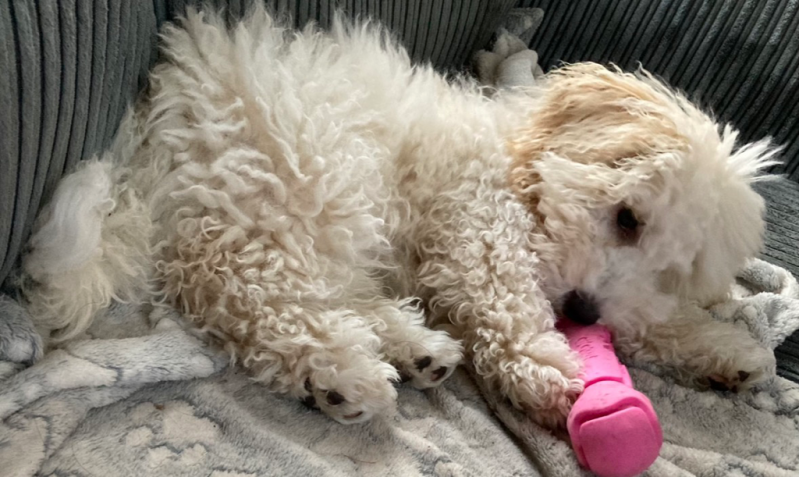
Puppy Biting and Chewing
Biting and chewing are completely normal behaviours in puppies. Puppies explore the world using their mouths, particularly during teething and early development. While this behaviour is natural, puppies must be taught bite inhibition—learning how much pressure is acceptable when using their teeth.
Teaching Bite Inhibition
Puppies learn bite inhibition through trial and error. If your puppy bites too hard during play, calmly say “ouch” and immediately remove yourself from the interaction. This shows your puppy that rough biting results in the loss of attention and play.With consistency, your puppy will begin to reduce the pressure they use. As progress is made, respond to increasingly lighter bites in the same way. The long-term goal is for you to be able to say “ouch” before teeth make contact, with biting stopping altogether.
Appropriate Chewing Outlets
Providing suitable alternatives for biting and chewing is essential. Offer a variety of safe toys and age-appropriate edible chews to help meet your puppy’s natural need to chew.
Be mindful not to immediately offer a toy or chew after your puppy has been biting you, as this can unintentionally reward the behaviour. Instead, calmly move away and wait for your puppy to settle. Once they are calm, redirect them to an appropriate toy or chew.
Using a crate or puppy pen can be helpful during this process, as it allows you to move away safely without the puppy following, giving them a short period (one to two minutes) to calm down.
What to Avoid
Never shout at, punish, or physically correct your puppy for biting or chewing. These responses can increase excitement or over-arousal and may worsen the behaviour. Calm, consistent responses combined with appropriate redirection are far more effective and support healthy learning and development.
Create Your Own Website With Webador